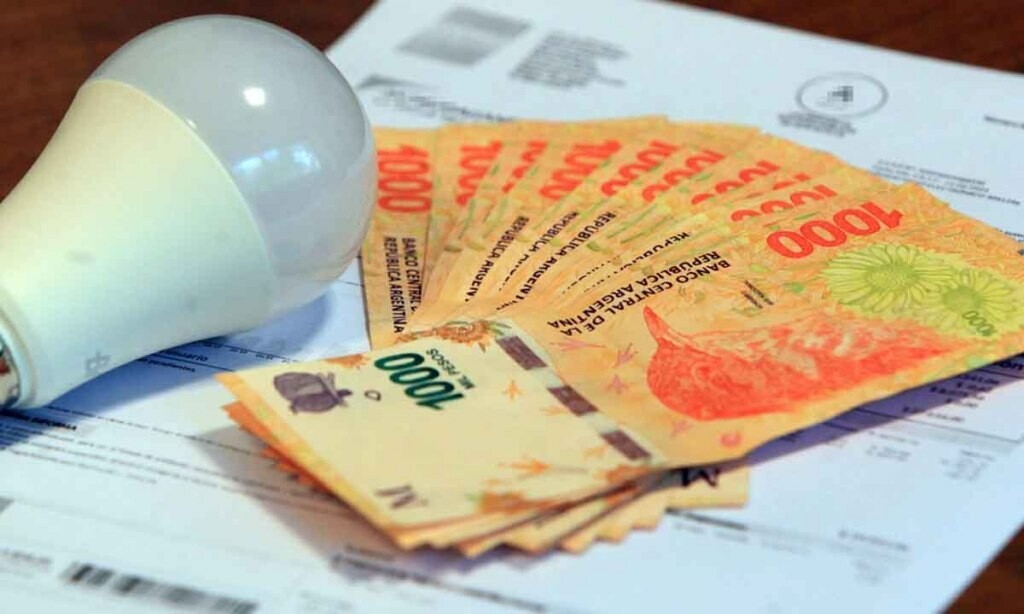
The National Government presented a new scheme of subsidies focused on vulnerable households, within the framework of the transition period to targeted subsidies, and arranged for a public consultation where the new design will be submitted. The Secretariat of Energy detailed the new scheme for subsidies, under which segmentation by N1, N2, and N3 levels will cease to exist, as well as separate schemes like the Hogar Program and the Social Gas Tariff. The communication emphasized the irregularity of the subsidy system, where 2,590,000 million users received low-income subsidies without meeting the requirements, and among them were 370,000 applications registered in the name of deceased persons. Additionally, 15,518 households located in gated communities and country clubs were found to be receiving subsidies as if they were low-income. New Scheme The new design will be divided into two groups: households with subsidies and households without subsidies. There will now be only two categories: households with subsidies and households without, based on their income, assets, and socio-economic condition. Households with subsidies will receive a bonus on the value of the energy. Households without subsidies will pay the full cost of the service. This new scheme will be subject to a public consultation in order to “put all interested parties in the know about the relevant precedents and the analysis carried out by the Regulatory Authority, ensuring citizen participation prior to its approval”. Through Resolution 484/2025 published today in the Official Gazette, to which the Argentine News Agency had access, it was reported that those interested in submitting suggestions, observations, and/or comments will have a maximum period of 15 business days. The secretariat led by María Tettamanti details that the aid will be focused on households with incomes less than three Basic Baskets (CBT), equivalent to $3,641,397. As for those already registered in the Register of Access to Energy Subsidies (RASE), they will not need to register again: their information will be automatically migrated, with the possibility of updating through a sworn statement. With this new scheme, 3,364,065 users from the Hogar Program will be incorporated and will receive subsidies “under clearer and more homogeneous rules,” maintaining state protection and gaining predictability over the impact of consumption on their bills. For users of propane gas supplied by networks and 10-kilogram GLP cylinders, they will have to wait until January to register for the form. It is available on the website www.argentina.gob.ar/subsidies. Electricity Households that qualify for subsidies will receive a base 50% bonus all year, applied to a block of 300 kWh (kilowatt-hour) monthly in high-demand months, and 150 kWh in temperate months. Gas In gas supplied by networks, the 50% subsidy will only be active between April and September, the months of highest consumption, while in low-consumption months there will be no subsidy. The subsidized consumption volumes for natural gas remain unchanged, as the current base blocks account for the seasonal needs of each region. María Tettamanti, Secretary of Energy. Extraordinarily, and only during 2026, an extraordinary 25% bonus will be added in January for both services. The total subsidy for electricity will be 75%, while for gas the bonus will be 25%. Energy details that this additional component “will be reduced month by month,” disappearing completely by next December. “With this step, the National Government reaffirms its decision to order the policy of energy subsidies, take care of Argentines' money, and advance towards a more just, transparent, and sustainable system, where social aid ceases to be a generalized benefit and returns to its essential function: to protect vulnerable residential users under a clear scheme with greater predictability in the impact of bills throughout the year”.