Buenos Aires, 11/28/2025 – Total News Agency – TNA. – The government of Javier Milei has taken a decisive step in its fiscal containment plan by publishing a resolution in the Official Gazette that redefines the subsidy scheme for electricity, natural gas, and gas cylinders, effective from January 2026.
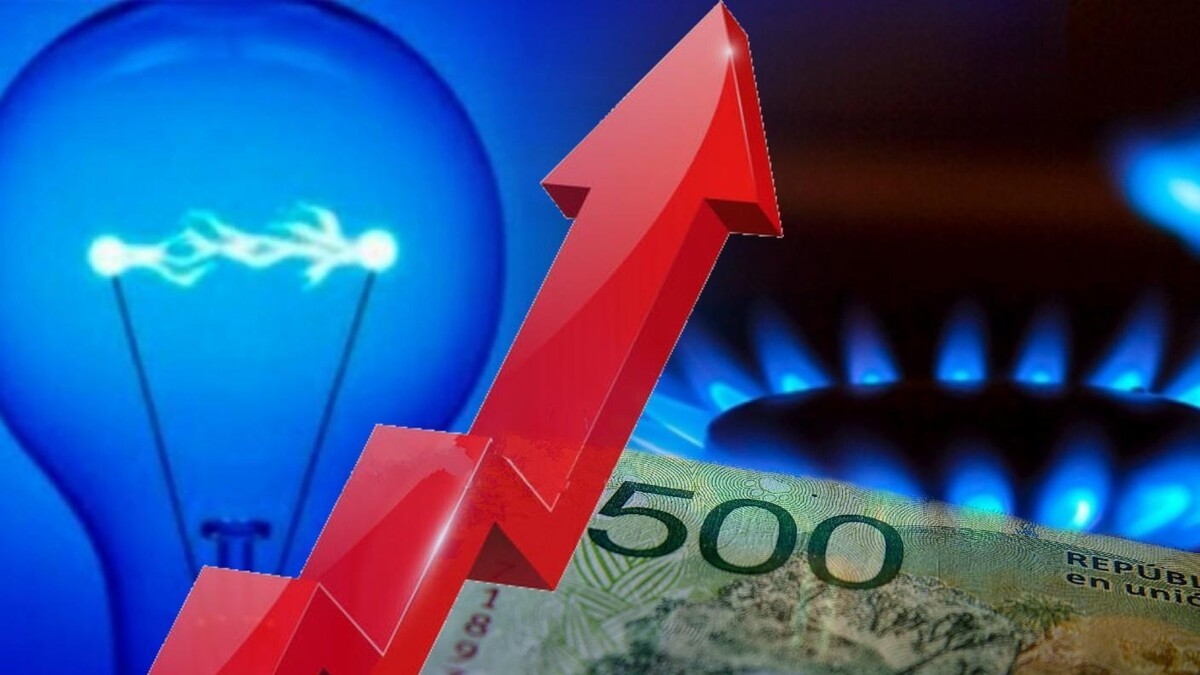
This measure deepens the Mileist adjustment in public services, following a 500% tariff increase in 2024 and monthly revisions of 4% in 2025. While the IMF applauds the "gradual exit path," the streets of Buenos Aires murmur about bills that, like winter, will arrive cold and expensive.
This model eliminates the previous three categories (N1 high-income, N2 medium, and N3 low-income) and the Hogar program, unifying 3.3 million beneficiaries under simplified rules.
For a typical middle-class household in Buenos Aires with a consumption of 300 kWh/month in electricity and 800 m³/year in gas, the combined bill could climb from the current $15,000 to $25,000-30,000 in winter, a jump of 60-100% adjusted for inflation. The targeting does not discriminate by income but by consumption: subsidized blocks are equivalent to 250 kWh/month for average households, and seasonal gas volumes that preserve the needs of Patagonian or cold regions – pending definition in the 2026 Budget.
According to official projections from the Secretariat of Energy, in high-demand electricity months (June-September), 35% of users will pay less than $22,000 per month, 66% below $44,000, and 81% will not exceed $67,000, assuming average consumption. For industries and businesses, the gas price will remain seasonal (USD 4.50 in winter, 2.90 in summer), but with fewer distortions.
The announcement, which opens a 15-day public consultation at www.argentina.gob.ar/subsidios to receive input from users and entities, responds to the fiscal target of reducing subsidy spending from 0.65% of GDP in 2025 to 0.5% in 2026 – equivalent to USD 3 billion annually.
In a context of projected inflation above 40% for the coming year, the Executive estimates savings of USD 1 billion, but opponents and consumer associations warn of a "devastating" impact on the family basket, with bills that could spike by up to 50% in peak consumption months.
Resolution 484/2025, signed by the Secretary of Energy, María Carmen Tettamanti, and dependent on the Ministry of Economy led by Luis Caputo, introduces the new Focused Energy Subsidies Regime (SEF).
To mitigate the shock, 2026 will feature an extraordinary 25% additional bonus in January: raising the total discount to 75% on electricity and 25% on gas (which usually does not receive aid in summer). Those who exceed the limits will pay 100% of the real cost, reflected in itemized bills showing the PIST (Integrated Reference Price of the Transport System) for gas and PEST (Stabilized Seasonal Price) for electricity, eliminating cross-subsidies.
Consumer defense associations, such as the Tariffs Observatory, warn that 60% of the population – dependent on subsidies – could face summer cuts due to vulnerable infrastructure, despite official guarantees of "no generalized cuts."
"We want to align the price the consumer pays with the cost of producing that energy," justified the Vice Minister of Economy, Daniel González, in a recent appearance before Deputies.
Independent economists, such as those from UTDT, project that the fiscal savings will be diluted if inflation exceeds 50%, but they celebrate the "transparency" in bills that expose the real cost of the system.
In a country where 40% of households already spend more than 10% of their income on energy, this cut revives the debate on equity: prioritize the fiscal deficit or cushion the impact on the middle class?
This surcharge will be reduced by 2% monthly until it expires in December, a "gradual exit rate" that the government deems "progressive" to avoid abrupt jumps.
Vulnerable households will maintain a 50% coverage base in high-demand months, but the bulk of the middle and upper class will face the real cost of energy, with wholesale prices stabilized at USD 3.80 per million BTU for gas (compared to the current USD 2.90 in summer and 4.50 in winter) and USD 75 per MWh for electricity.
The impact on bills will be immediate and progressive. Only two user groups: those with subsidies for essential consumption blocks – defined by seasonal and regional needs – and the rest, who will pay the full rate without discounts.
Opponents such as Kirchnerism and the CTA denounce a "savage cut" that worsens energy poverty, affecting 76% in electricity and 79% in gas who will now cover only 24% and 21% of the real cost, respectively.
The measure, which replaces income segmentation with a system focused on basic consumption, will imply tariff increases for 45% of Argentine households – some 7.5 million users – and the total loss of bonuses for 140,000 middle-income families.
For gas, the 50% subsidy will be limited to April-September, leaving October-March without a base subsidy – except for a temporary transition. From January, registration will be mandatory on the official portal. Current users will not need to re-register – their data will migrate automatically – but they must update it via sworn statement if conditions change.
Gas cylinder users (10 kg LPG) will receive a direct subsidy equivalent to half a cylinder monthly all year, plus an additional one in winter, credited to virtual wallets like Mercado Pago after an electronic purchase.