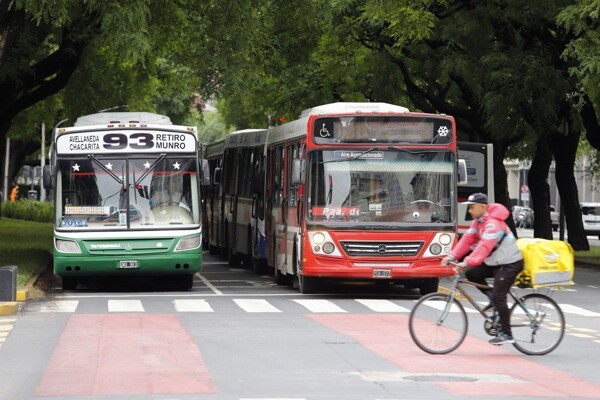
Buenos Aires, November 19 (NA) — Fiscal adjustment has directly impacted passenger road transport in the AMBA (Greater Buenos Aires Area). This disparity has led to a loss of service quality and less renewal of vehicle fleets. The impact of the 'chainsaw' on funds is tangible: according to data from the IIEP (UBA-Conicet), subsidies to the system have fallen by 43% in real terms so far in 2025. In this context, the Automotive Transport Workers' Union (UTA) issued a stern warning: 'The Government will be responsible for workers going on strike to receive their salaries on time and in full.' Companies in the sector have confirmed they will pay November salaries in two installments and bonuses in six, which could trigger a new labor conflict. According to information from the Argentine News Agency, the measure was communicated through a letter sent to the Secretaries of Transport and Labor. Business chambers argue an 'absolute breakdown of economic equilibrium,' pointing out that the Government recognizes costs that are 30% below the real ones. According to the AAETA 'Bondi Index,' the State recognizes a monthly cost of 265,779.1 million pesos, while the real cost to operate the system amounts to 351,910.05 million pesos.