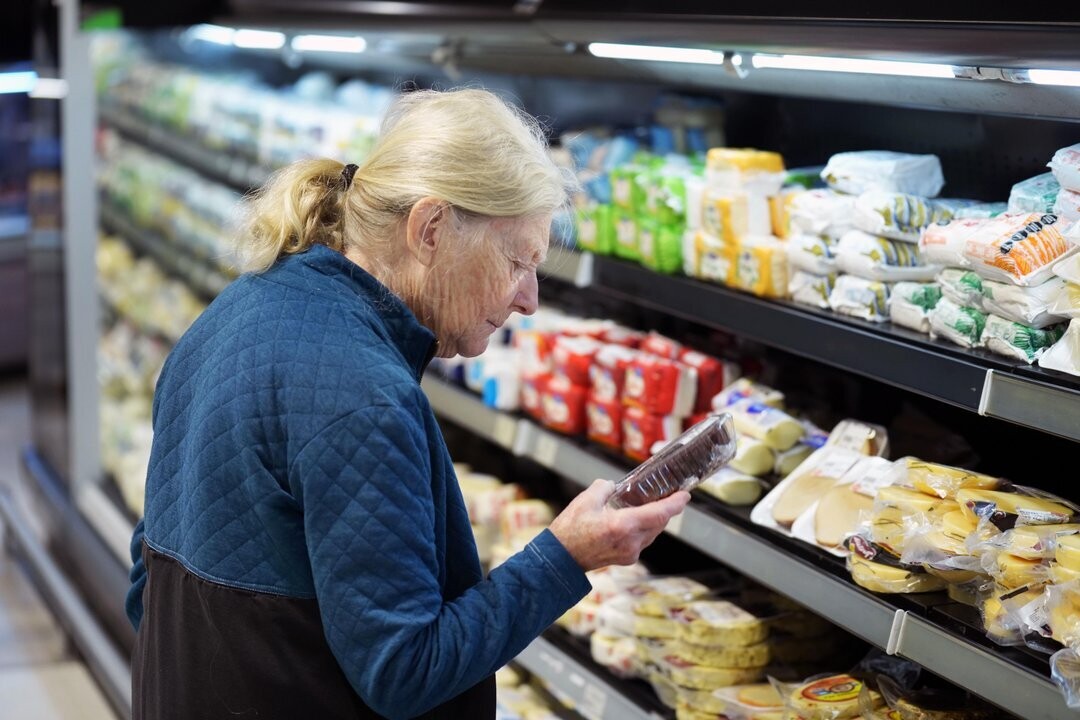
So far this year, cumulative inflation is 24.9%, while the year-on-year change stood at 31.4%, continuing its deceleration. From Libertad y Progreso, they explained that “the month showed a relatively steady path, with a slight acceleration at the end, but without abrupt jumps” and emphasized that “the food and beverage sector had been growing remarkably, it moderated in the third week, to accelerate again in the fourth week of the month.” Meanwhile, Analytica indicated that the general level of consumer prices will reach 2.2%, a variation similar to the official September figure. The retail price survey by the consulting firm C&T Asesores Económicos for the Gran Buenos Aires (GBA) region had a monthly increase of 2% last month, explaining that “various goods and services was the sector with the highest increase (4.5%), driven by a combination of rises in cigarettes and toiletry and beauty items.” The Central Bank's REM survey projected that inflation for the tenth month of 2025 would have been at 2.2%. In this context, they highlighted that the 12-month price variation slightly decreased from 30.3% in September to 29.3% last month. Equilibra projected 2.1 percent, the same number as in September, driven by the Core component (2.2 percent). “Non-seasonal food and beverages” led the month's increase (2.3%), while “seasonal and regulated” items rose 1.9%. above what was recorded in September, noting that “during the first four weeks of the month, with the exchange rate on the rise and in anticipation of the elections, inflation in food recorded weekly increases of between 0.5% and 0.9%.” And it highlighted that “after the ruling party's victory, the dynamics tended to moderate, and the last week registered a 0.2% increase.” The Market Expectations Survey (REM), prepared by the Central Bank (BCRA) based on private estimates, projected that inflation for the tenth month of 2025 would have been at 2.2% and expects annual inflation to close 2025 at 29.6%. The advance of the national IPC. Inflation in the City of Buenos Aires last month reached 2.2%, the same figure as in September. The price variation in the federal territory during 2025 reaches 25.3%, while it increased by 33.6% in one year. This number was driven by the rise in food, transportation, health, and housing expenses, according to the Buenos Aires Institute of Statistics and Censuses. National inflation would have been above 2%. This increase reveals that the rise in the exchange rate had an effect on prices, albeit limited by the slowdown in economic activity. compared to the previous month. In its measurement, it highlighted that the “food and beverages” sector accumulated a monthly average increase of 2.9% until the fourth week of October. Meanwhile, Econviews and Libertad y Progreso project variations in the upper range, between 2.4% and 2.8%, while pointing out the strong incidence of food in this trend. The Libertad y Progreso Foundation, in detail, estimated that inflation closed at 2.4% in October. Among them, increases in public transport (buses and subways in the AMBA) stood out. EcoGo Consultants, for its part, estimated that last month's inflation reached 2.4%, with an average variation in food and beverages rising to 3%, maintaining that “electoral uncertainty had little impact on prices, with a relatively moderate pass-through.” Regarding the dynamics of food prices, it was located 0.1 percentage points (p.p.). The National Institute of Statistics and Censuses (INDEC) will tomorrow release the October Consumer Price Index (IPC) data, where the figure would be above 2%, according to consulting firms. After having recorded a sharp deceleration in May (1.5%) compared to April (2.8%) and March (3.7%), the inflationary index slightly resumed its upward path in June (1.6%), July and August (1.9% both), and September (2.1%) which would have been maintained in October, according to private analysts. Thus, the IPC for the eleventh month of the year would have risen and would be located above the same number of September. The official data will be known next Wednesday at 4:00 p.m. This increase, according to consulting firms, was driven by the food and beverage sector, which exerts the greatest pressure on the indicator that the statistical body will release. The increase would also be explained by the overheating of the dollar, whose rise has an impact on costs and prices in general. The official data will be known next Wednesday at 4:00 p.m. During the last weeks of October, high levels of volatility were registered, product of the uncertainty generated by the midterm elections, in which finally La Libertad Avanza (LLA) was imposed with 40% at the national level. What the consulting firms estimate LCG predicted inflation close to 2.5% for the general level, which implies a 0.4 percentage point (p.p.) increase. The sub-sectors most affected by pronounced increases were dairy, eggs, baked goods, and meats. In addition, PxQ was the consulting firm that estimated the lowest number, with 1.9 percent for the eleventh month of 2025. To the pressure from the food basket, the impact of regulated prices was added.