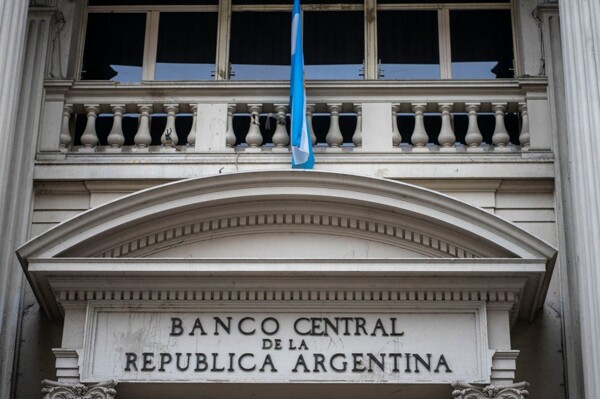
Buenos Aires, November 8, 2025 – Total News Agency-TNA – The United States government has issued an ultimatum to Argentina: the path to a bilateral trade agreement—which includes tariff reductions and openings for the export of Argentine beef—is conditional on the country “prioritarily” complying with patent law and reinforcing respect for intellectual property. According to documents from the Office of the United States Trade Representative (USTR), Argentina is listed among the countries of “greatest concern” regarding patent rights for pharmaceutical and agrochemical products, creating a de facto block in trade negotiations. The core of the complaint centers on Joint Resolution 118/2012, along with norms 546/2012 and 107/2012, which regulate the patentability examination of chemical-pharmaceutical inventions. The sign of the negotiation could mark the direction of its management: towards a more open Argentina to global capital and international trade standards, or towards a closed defense of the domestic market with lower tariffs but also lower exports. The U.S. pressure not only questions the legal framework for patents but also exposes the tension between local industrialization, access to medicines, and Argentina's export interests. In reports from the American Chamber of Commerce in Argentina, it is warned that barriers to the recognition of productive patents and the slowness of validation processes hinder the arrival of foreign investment in biotechnology and health. For Argentina, the requirement has a dual effect: on one hand, as an exporter of beef and agricultural products, it seeks to take advantage of a favorable agreement with the U.S.; on the other, as a country with a vulnerable health system, it sees how maintaining the status quo on patents has a direct cost for end-users. At this crossroads, the government must show if it has the political and technical will to carry out reforms in intellectual property that have so far been resisted, both by industrial tradition and corporate influence. Analysts point out that this situation benefits exclusively a small group of local laboratories that reproduce generics and maintain high margins with excessive profits, while the population's access to medicines remains restricted. The U.S. threat is clear: without progress on this point, the expected agreement for Argentina with the possibility of exporting beef with tariff reductions is stalled. The level of agreement reached in the coming months will be key to defining whether Argentina can benefit from greater global commercial and health integration, or will be left out of the game that the U.S. demands. The U.S. demands the repeal or revision of these instruments because it considers them to prevent the full enforcement of Patent Law 24.481, enacted in 1995. The restrictions derived from permissive regulations on the copying of medicines generate more economical products for local manufacturers, but they also fuel high prices and closed markets that prevent real competition. Therefore, more expensive medicines for users. In this sense, alignment with the U.S. demands a profound internal reform: modifying regulations, transparentizing approval processes, supervising laboratories, and providing resources to the INPI. This has political costs internally, especially because the local industry—with robust political and economic ties—sees its income and consolidated positions threatened, and those same political links allow for “opaque” hiring in the public sector in strategic areas. The dilemma for the government of Javier Milei is posed: deciding whether to prioritize a trade opening strategy with the U.S. or maintain local production structures that have generated profits for a small group to the detriment of access and equity. On the other hand, non-compliance could close access to key export markets and limit integration with the U.S. In private, they recognize that the U.S. pressure, which also includes combating the sale of counterfeit medicines, adherence to the Patent Cooperation Treaty (PCT), and reinforcing the staff of the National Institute of Industrial Property (INPI) to accelerate patent filing procedures, is willing to open. Official interlocutors indicate that the negotiations are led by the Minister of Economic Deregulation, Federico Sturzenegger, and by the Minister of Foreign Relations, Pablo Quirno. At that time, the companies grouped in CILFA hired a specialized lobbyist, Rafael Alonso, where astronomical figures moved, as Total News Agency was able to learn after accessing detailed information.