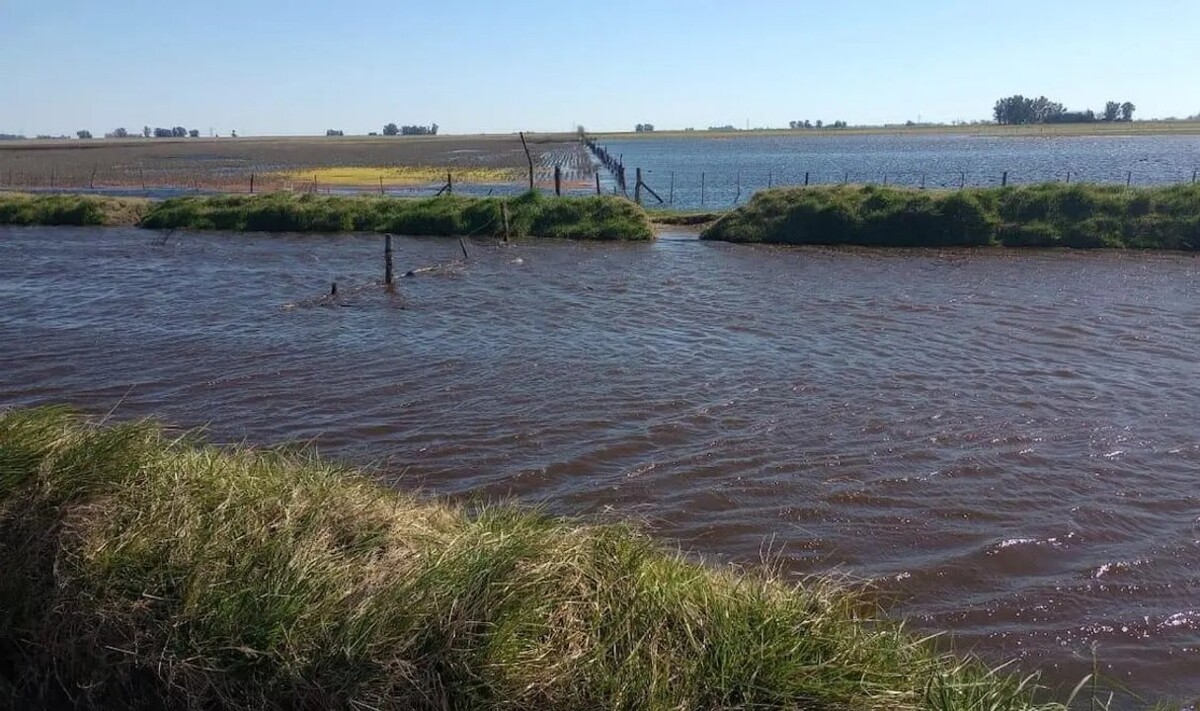
Producer Paulina Bordeu stated that until the situation is fixed and the water flow is allowed to continue its course, Bragado will continue to be a large pot that receives water and becomes stagnant. The lack of works has direct human consequences, especially for workers residing in the city who must travel up to 50 kilometers daily on dangerous roads. 'The man of the land wants to get ahead,' she asserted, detailing the bureaucracy that requires the road network to be up to date to move production, automatically blocking the accounts of those who do not comply. 'The desperation' of the producers, which escalated with the threat of a tax rebellion, motivated the first visible reaction from the mayor after months of crisis. 'In my house, absolutely nothing, nothing, nothing could be planted all year,' stated Bordeu, who explained that the road to her property, just 12 kilometers from the city, is 'completely a river, a river.' 'There are many people who are not heard and are having a hard time with water near their house,' Bordeu concluded, emphasizing that the defense of her activity is not selfish, but a claim for 'facts' and the productive future of the country. This interruption of livestock and agricultural production, Bordeu emphasized, causes an 'enormous' economic and social loss for the country. Road tax without consideration and the mayor's gesture The producer focused on the disproportion between the high costs they face and the services they receive. 'You start to see what stagnant water is like, and this week some animals started to die.' According to the producer, the excess water raises 'a bunch of bacteria and things that the water brings up,' affecting cows that 'are very sensitive and you don't have time to stop it.' Harsh criticism from a Kicillof minister to Milei for the paralysis in the Salado Basin plan On the agricultural front, the outlook is no better. For a 500-hectare field, Bordeu estimates the monthly road tax payment is 'between 5 and 7 million pesos.' The serious flood crisis hitting Bragado since March has sparked strong criticism of the municipal authorities, whom agricultural producer Paulina Bordeu accused of inaction during three years of drought, an ideal period for carrying out works. Bordeu denounced that despite paying multi-million dollar road taxes monthly, the necessary infrastructure to mitigate the situation that today keeps various families and fields isolated was not completed. The lack of an adequate response led producers to send a formal letter to the municipality, even considering a tax rebellion as a pressure measure. The core of the problem is the stagnant water that has destroyed rural roads, preventing entry and exit to properties. 'The mayor came out for the first time in a helicopter and announced he would tour the area,' Bordeu stated, emphasizing this happened after the 72-hour deadline of the formal letter had passed. Bullrich will visit 9 de Julio to coordinate assistance after the floods The key to the water circuit and lack of planning According to Bordeu, the solution to the problem is structural and requires planning that addresses the region's water circuit. Water enters Bragado from 9 de Julio and becomes stagnant because the embankment of the tracks prevents it from continuing its course to Mechita, in addition to the retention generated by a lagoon near the city. The situation represents a health and economic danger, directly impacting livestock. In dialogue with Radio Rivadavia, Bordeu described the crudeness of the situation: 'Our animals are going through a hard time right now. Furthermore, she denounced a recent 25% increase in the tax, despite the emergency. To access their properties, they have to take a 50-kilometer detour.'