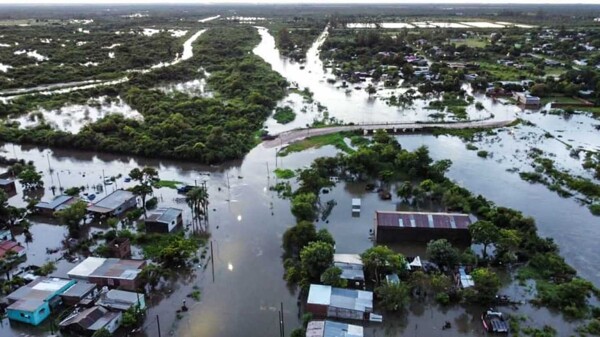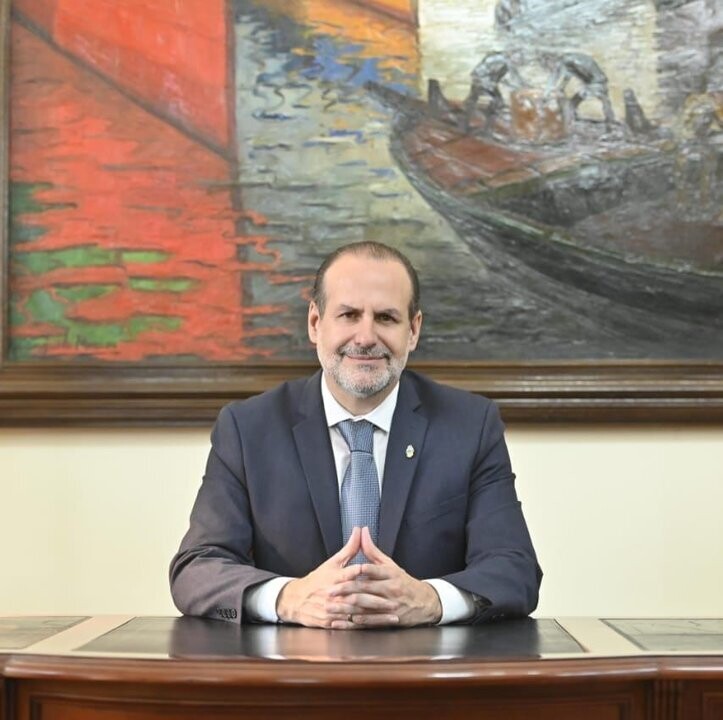
The mayor of Bahía Blanca, Federico Susbielles, whose party was affected by the flood and storm on March 7th, announced today that an agreement has been reached with companies from the petrochemical hub to finance 13 hydraulic works following the controversy over a proposed rate increase to fund this project.
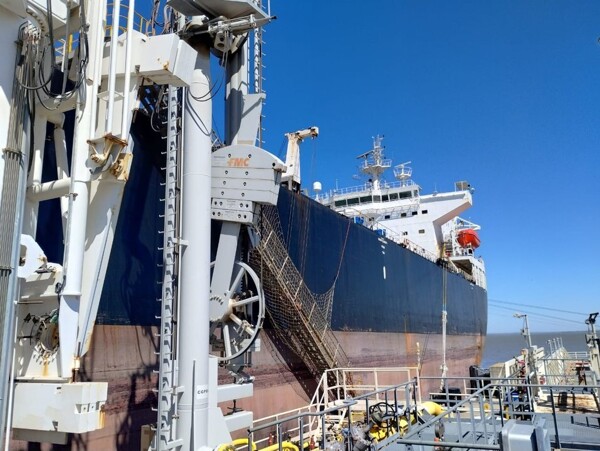
The announcement was also attended by the first vice president of the Bahía Blanca Industrial Union, Gustavo Damiani, and Gustavo Lucero, head of the Chamber of Licensees and the chemical, petrochemical, oil, and grain companies of our city, according to the Argentine News Agency.
"Chemical, petrochemical, and oil companies will make an extraordinary and one-time contribution, equivalent to the amount of the surcharge they already pay, allocated to these works for the 2026 and 2026 fiscal years," stated the mayor during the presentation held at the Municipal Palace.
Susbielles expressed that "I have no doubt that the strength of the city is its people; we have neighbors who are resilient, hard-working, enterprising, and solidary, and those values of our citizenship are also represented in firm, prestigious institutions that I believe, at this very difficult time, rose to the occasion to be able to reach this agreement."
"From the Executive Branch, the need to address 13 very important hydraulic works in the city of Bahía Blanca has been raised, which has to do with generating safety conditions for many neighbors in the event of any climatic contingency," added the mayor.
Susbielles then commented that it will be a specific fund for "hydraulic works in the 2026 and 2027 fiscal years" that will be an "extraordinary and one-time contribution due to the exceptional contingencies the city is experiencing and will be for the same amount as the surcharge that chemical, petrochemical, and oil companies currently pay, to which are added an additional 3 billion annually from grain companies."
For his part, Gustavo Damiani indicated that "for us, this act is very important because, as we ratified in the first communiqué we made, we bet on dialogue. And this final result arises from the dialogue between the municipal administration sector, with its political decisions, and the openness of the parties."
Lucero highlighted "having maintained a permanent dialogue as a success factor" and the role of business chambers as interlocutors "because it is the environment that allows all of us to find solutions and propose the best proposals that allow us, in this particular case, to fulfill our role of a good neighbor."